
Home & Garden
Organize an Entryway Around the Way Your Household Comes and Goes
Arrange an entryway around arrivals and departures, with clear walking space and a small home for everyday essentials.
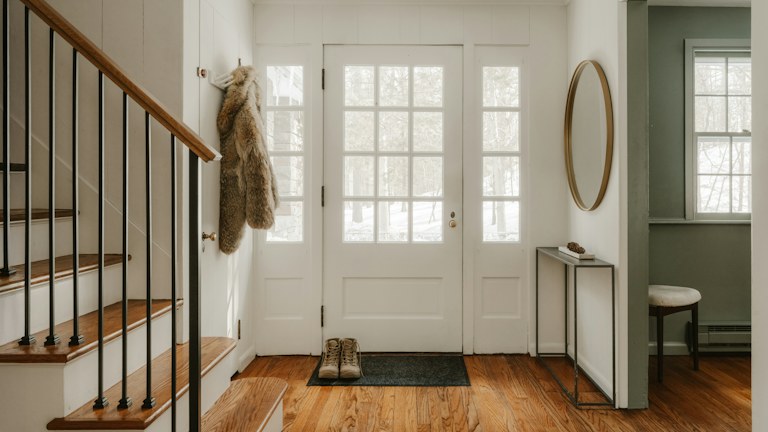
Photo: Clay Banks / Unsplash. Stock photograph for illustration.
In this guide
An entryway handles many small transitions. Shoes come off, bags arrive, keys disappear, and something that needs to leave the house is placed near the door. When those actions have no clear home, the area becomes crowded even if the rest of the room is tidy. The most useful entryway arrangement begins with the movement of people rather than the appearance of a storage bench.
You may have a separate hall, a narrow corner, or a front door that opens directly into a living space. The same principle applies: protect a clear route and give the few essential arrival and departure items a deliberate place. Start with what already happens before buying anything.
Watch one ordinary arrival and departure
Notice what each person carries and where those items land. A bag may go on the nearest chair because a hook is too far from the door. Shoes may gather in the walkway because the storage area is awkward to reach. These patterns are useful information about the arrangement, not simply habits to criticize.
Make a short list of the items used almost every day. Keys, a small bag, current footwear, and a coat may belong near the door. Equipment used once a season probably does not need the same space. Distinguishing frequency helps prevent the entryway from becoming a general storage area.
Consider different household members. A child, someone carrying groceries, and a person using a mobility aid may need different clearances and reachable storage. An arrangement only works if the people using it can complete the routine comfortably.
Protect the route before adding furniture
Open the door fully and look at the path into the home. Check the swing of nearby doors, the space needed to turn, and the places where bags or footwear create a trip risk. Keep exits and required access clear. A piece of furniture that fits against a wall can still interfere with how the space is used.
Measure the available area and test a proposed footprint with a temporary outline before purchasing storage. Walk through with the objects you normally carry. If you need to turn sideways or move a basket every time, the proposed solution is too large or badly placed.
Avoid using unstable stacks as temporary storage. Choose equipment suited to the load and follow the manufacturer's instructions for installation and anchoring. The entryway should make ordinary movement easier rather than introducing a new obstacle disguised as organization.
Give daily essentials a small landing place
A tray, shallow shelf, or existing drawer can hold the items you need to find before leaving. Keep its purpose narrow. If it collects mail, spare batteries, old tickets, and unrelated objects, the daily essentials will disappear into the same kind of pile you were trying to solve.
Decide whether household members need separate spaces or a shared one. A divided tray may work for keys and small accessories, while a single bowl may be enough in a smaller household. Choose a system that is obvious without repeated explanation.
Keep sensitive items appropriately protected. The most convenient location beside an entrance is not always the best place for documents, valuables, or information visible to visitors. Convenience is one consideration among several, and some items belong farther inside the home.
Limit the footwear and outerwear in active use
Keep the shoes and coats currently used most often near the entrance, and give less-used items another home. This does not require a fixed numerical rule. The right amount depends on the people, weather, and available space, but it should be small enough that the area can be reset easily.
Choose storage that matches the items rather than forcing them into a decorative container. Tall footwear may not fit a low shelf, and a wet coat may need an appropriate place to dry before it enters enclosed storage. Follow care instructions and protect surfaces from moisture where necessary.
Make returning an item as easy as dropping it on the floor. Open shelves or reachable hooks may work better than a complicated sequence of doors and lids. Test the arrangement for a few days before assuming that more labeling will fix a design that is awkward to use.
Create a visible but temporary departure zone
Items that need to leave the house can occupy a small, clearly defined spot. A library book to return, a package ready to send, or a bag prepared for tomorrow belongs there temporarily. The zone should signal an action, not become permanent storage for things you might deal with eventually.
Attach enough context to prevent mistakes. A package without a label or a bag with no indication of its destination may simply sit there. A brief note naming the next action can help, especially when several people share responsibility.
Review the departure zone at a regular moment, such as before the next day's first outing. If an item stays for weeks, decide whether the action still matters. Moving an unresolved decision closer to the door does not complete it, but a deliberate review can.
Handle paper before it spreads
If mail enters through the same area, choose a simple first step. Separate material that needs attention from material that can be dealt with immediately according to your household's usual process. Do not create a detailed filing station in a narrow hall if the real paperwork happens elsewhere.
Carry important documents to their proper working location rather than leaving them mixed with bags and shoes. A small incoming tray can be useful as a short transition, provided someone knows when it is reviewed. Avoid allowing the tray to become the only record of a deadline.
Keep the surface easy to clean. An entryway often collects outdoor dirt and moisture, so a crowded decorative display may make routine care harder. A few intentional objects can create a welcoming feel without occupying every useful inch.
Review the arrangement after a normal week
Look for the places where items still gather outside their intended homes. Ask whether the storage is too small, too high, too hidden, or simply unnecessary. Change one part at a time so you can see whether the adjustment helps.
Include a quick reset in the household routine: return misplaced items, remove completed departures, and check the clear route. The task should be brief. If it requires a major sorting session every week, reduce what the entryway is expected to hold.
A successful entrance is not necessarily an empty one. It is a space where arriving feels straightforward, leaving requires less searching, and the household can move through safely without negotiating a growing collection of postponed decisions.