
Home & Garden
Arrange Kitchen Work Zones Around Everyday Tasks
Arrange everyday kitchen tools around the tasks you perform, with room for preparation, serving, and cleanup.
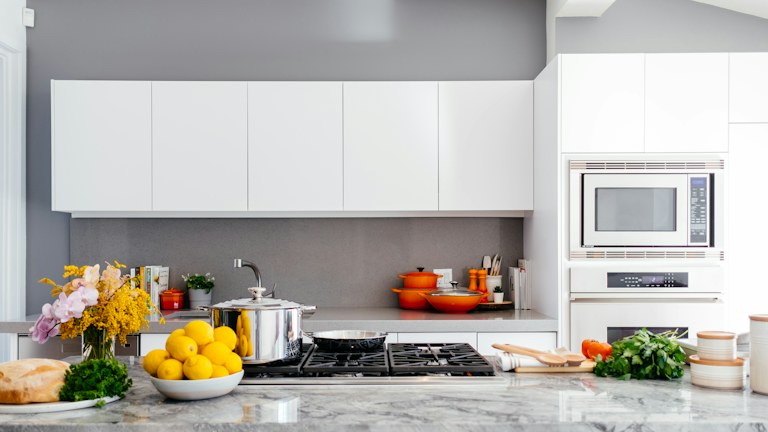
Photo: Jason Briscoe / Unsplash. Stock photograph for illustration.
In this guide
A kitchen can contain all the right equipment and still feel awkward to use. The cutting board is across the room from the preparation space, the mugs are far from the kettle, and clean dishes need to travel past the person making dinner. Rearranging a few frequently used items may help more than buying additional organizers.
Work zones are simply groups of tools and supplies placed near the tasks they support. They do not require a large kitchen or a formal design plan. Begin with how your household prepares an ordinary meal, makes a drink, and cleans up afterward. The goal is to reduce unnecessary movement while keeping the space safe and flexible.
Observe a familiar task from start to finish
Choose something you make often and notice each place you move. Where do you collect ingredients, prepare them, find utensils, cook, and serve? Write down the moments when you cross the kitchen for a single item or need to move something out of the way.
Repeat the observation for cleanup. A convenient cooking arrangement can still create a difficult path for returning dishes and equipment. Consider the person who empties the dishwasher or dries items by hand, because storage needs to work in both directions.
Do not reorganize everything after one observation. Some awkwardness comes from a temporary pile or an unusual meal. Look for repeated patterns. A small change that helps several daily tasks is a better starting point than a dramatic rearrangement based on one busy evening.
Define a preparation area
Identify the surface where most cutting, mixing, or assembling happens. Keep enough clear space to use the relevant tools comfortably. Store frequently used preparation items nearby where that can be done safely and without crowding the worktop.
Separate safe storage from simple proximity. Knives and other potentially hazardous tools need an appropriate location, especially where children or visitors use the kitchen. Follow the equipment's instructions and your household's safety needs rather than placing every tool within immediate reach.
Avoid using the preparation area as permanent storage for objects that rarely move. A decorative arrangement or seldom-used appliance may consume the space needed for ordinary cooking. Test moving one such item to see whether the surface becomes more useful before making larger changes.
Group cooking tools by actual use
Keep the utensils and cookware used most often in an accessible location suited to their weight and size. A heavy pan may be easier to handle from a lower, convenient shelf than from an overhead cupboard. An item used only occasionally can occupy a less central location.
Do not store heat-sensitive or combustible items where cooking conditions could make them unsafe. Follow appliance clearances and product instructions. A work zone is meant to support safe tasks, not pack every associated object tightly around a heat source.
Consider the combinations you use. If a particular pot and lid are usually needed together, make them easy to retrieve as a pair. If lids become difficult to distinguish, a simple arrangement by size may help more than a specialized organizer that adds another layer of handling.
Make drinks and quick meals easier
A small drinks area can gather mugs, the equipment used for making a drink, and the supplies that belong nearby. The location should suit water access, electrical requirements, and the available clear surface. Avoid creating a station that blocks the main preparation area every morning.
Keep the group proportionate to actual use. If the household regularly uses four mugs, a crowded display of every mug owned may not help. Store the active collection conveniently and give occasional items another home if space is limited.
Apply the same reasoning to quick breakfasts or packed lunches. A small group of frequently used containers or tools can save searching. The purpose is not to create a separate station for every possible task, but to make repeated routines easier within the kitchen you have.
Connect serving and clearing away
Place everyday plates, bowls, and cutlery where they are convenient for setting the table and returning after washing. In a shared kitchen, this may be slightly different from the location that is most convenient for the main cook. Discuss the tradeoff rather than assuming one person's routine defines the whole room.
Keep serving pieces that are used together recognizable. A platter stored behind several unrelated objects is less likely to be used, even when it would help. At the same time, occasional entertaining supplies do not need to occupy the most accessible everyday shelf.
Leave a practical place for used dishes without blocking the sink or preparation surface. The exact arrangement depends on the kitchen, but a clear expectation can prevent dishes from spreading across every available counter during a busy meal.
Store cleaning materials deliberately
Give cleaning tools a defined place and keep products in their original, appropriately labeled containers. Follow storage instructions and keep them separate from food and out of reach where necessary. A convenient cleanup zone should not compromise the safe handling of household products.
Check whether cloths, brushes, and other reusable tools have a suitable way to dry and be maintained. A container that hides everything can look tidy while making it harder to notice an item that needs attention. Choose storage that supports the care routine rather than merely concealing the tools.
Do not add cleaning supplies because a new organizer has empty compartments. Keep what you use and understand. The same principle applies throughout the kitchen: storage should reflect the routine, rather than encouraging the collection to expand until every space is filled.
Test changes without making them permanent
Move a small group of items and try the arrangement for several meals. Let other household members know what changed. A temporary label can help during the transition, especially when a drawer has held the same contents for years.
Notice whether the change reduces movement or simply transfers the inconvenience to another task. If preparing food becomes easier but unloading dishes becomes much harder, adjust the balance. The kitchen works as a shared sequence of tasks, not a set of isolated perfect stations.
Finish by giving the most useful changes a stable home and returning experiments that did not help. You do not need to achieve an ideal layout in one session. A thoughtful kitchen arrangement grows from observing ordinary work and making the next meal a little easier to prepare and clear away.