
Learning
Build a Typing Practice Routine Around Accuracy and Everyday Tasks
Build a manageable typing routine that includes accuracy, punctuation, editing, and everyday writing.
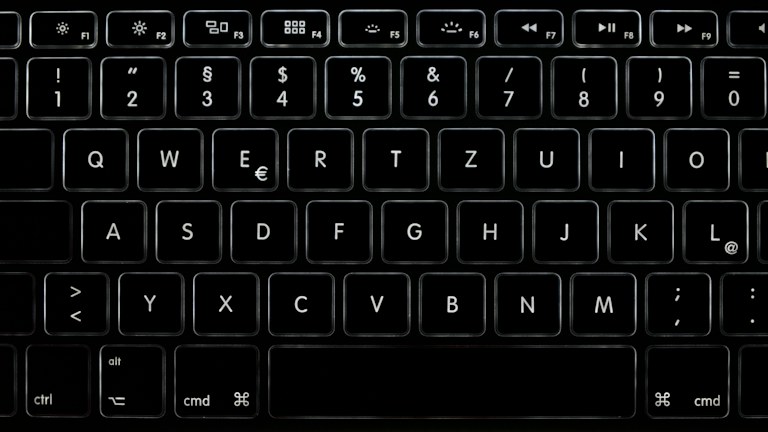
Photo: Alexander Sinn / Unsplash. Stock photograph for illustration.
In this guide
- Identify the kind of typing you want to improve
- Set up a position you can use comfortably
- Learn a consistent way to find the keys
- Give accuracy a clear place in the routine
- Include punctuation, numbers, and corrections
- Combine copying with your own writing
- Use a small schedule you can repeat
- Measure progress in a way that reflects usefulness
Typing practice is most useful when it makes the writing you actually do easier. A high score on a short test may be satisfying, but it does not necessarily mean you can draft an email, enter names accurately, or revise a paragraph comfortably. A practical routine includes familiar words, punctuation, corrections, and the kinds of text you encounter in ordinary work. It also leaves room for a pace that suits your hands and attention.
You can start with a basic keyboard and a document editor. There is no need to buy a course before you understand what needs improvement. Observe your current habits, choose one skill at a time, and measure progress using comparable tasks rather than chasing a number that changes with every test.
Identify the kind of typing you want to improve
Write down the situations in which typing slows you down. You may pause to find punctuation, make frequent errors in numbers, or lose your place when copying text. Someone who writes prose has different practice needs from someone who enters product codes. Choosing a real task helps you avoid spending all your effort on exercises that do not transfer to daily use.
Take a short baseline sample using ordinary text. Note the time, the mistakes, and what felt difficult. Keep the same sample for a later comparison, but do not practice it so often that you merely memorize it. Also save a second sample of similar difficulty. Improvement should show up on unfamiliar material, not only on the paragraph you have rehearsed dozens of times.
Set up a position you can use comfortably
Arrange the keyboard and screen so you are not repeatedly reaching or twisting to see the text. Use a position that feels comfortable for a short session, and adjust if it becomes awkward. Different bodies, keyboards, and access needs call for different arrangements. A typing guide should not pressure you to maintain a rigid posture or continue through discomfort.
Keep practice sessions short enough to notice how you are working. If pain, numbness, or persistent discomfort occurs, stop and seek appropriate guidance rather than treating it as a normal cost of improving. For ordinary practice, frequent opportunities to relax your hands and change position are more sensible than one long session performed with increasing tension. Comfort is part of a usable skill, not a separate reward after achieving speed.
Learn a consistent way to find the keys
Choose a keyboard technique that you can repeat and develop. Some learners use a conventional touch-typing approach, while others adapt their method to their equipment or physical needs. The important practical goal is to reduce unnecessary searching without sacrificing accuracy or comfort. Notice which keys repeatedly interrupt your flow and work on those deliberately.
Begin with small groups of letters or common combinations rather than the entire keyboard at once. Keep your eyes on the practice text when you can, but do not turn an occasional glance into a reason to abandon the session. You are building familiarity. Slow, correct repetitions are more useful than racing through mistakes while hoping the layout will eventually become automatic.
Give accuracy a clear place in the routine
Choose a pace at which you can type a short passage with relatively few errors. When you make a mistake, correct it using the method you normally use in real writing. Notice whether the error came from hitting a neighboring key, reversing letters, or anticipating the next word. Different patterns suggest different practice, so treat the error as information rather than a general verdict on your ability.
Keep a small list of recurring trouble spots. Practice those combinations within actual words and sentences, not only as isolated strings. If you repeatedly mistype a common ending, write several varied sentences containing it. The purpose is to build a reliable movement in context. A perfectly rehearsed sequence that never appears in your writing is less useful than a modest improvement in a frequent everyday pattern.
Include punctuation, numbers, and corrections
Many simple exercises underrepresent the parts of typing that make real documents demanding. Add sentences with commas, quotation marks, parentheses, and the symbols you regularly use. Practice dates or reference numbers if those belong to your work, using invented examples rather than private records. Read them back carefully, because a single wrong digit can be harder to notice than a misspelled word.
Practice editing as well as entering new text. Move within a sentence, replace a phrase, and correct a repeated word. Learn the navigation and selection commands available in your editor through its current help or menus. You do not need to memorize every shortcut. Start with a few actions you perform often and use them consistently until they become useful rather than another thing to recall.
Combine copying with your own writing
Copying a passage lets you focus on keyboard movement, but original writing adds the work of deciding what to say. Include both in your routine. After a short copying exercise, write a paragraph about an ordinary topic, such as plans for the weekend or a description of a room. Keep the subject easy enough that the writing task does not overwhelm the typing practice.
Notice where you pause. A pause caused by choosing the next idea is different from a pause caused by finding a key. Do not interpret every interruption as a typing problem. Separating those sources of effort makes your practice more precise and helps you avoid the unrealistic expectation that composing thoughtful prose should feel as fast as copying a familiar sentence.
Use a small schedule you can repeat
Attach practice to a predictable moment, such as the beginning of a personal computer session. A brief routine might include a warm-up passage, one focused exercise, and a short piece of original writing. Keep the total modest and finish while you are still paying attention. A routine that requires a large uninterrupted block is easier to postpone.
Vary the material while keeping the structure stable. You can practice one troublesome pattern for several sessions, then change the focus when it becomes more reliable. Avoid adding a new target every day. Give yourself enough repetition to see whether an adjustment helps. If you miss a session, resume the next one without doubling the workload as punishment or deciding the entire plan has failed.
Measure progress in a way that reflects usefulness
Compare similar passages under similar conditions occasionally. Record accuracy alongside speed, and note whether the task felt easier. A faster result with many more corrections may not be an improvement for your actual work. Test unfamiliar text as well as your baseline sample so you can see whether the skill extends beyond memorized material.
Also look for practical changes: fewer glances at the keyboard, less trouble with punctuation, or easier editing of a message. Those gains matter even if a test score moves slowly. Keep the routine only as detailed as it needs to be. The purpose is to make typing a dependable part of writing and communication, leaving more attention available for the ideas you want to express.